How Long Does Artificial Turf Last in Arizona?
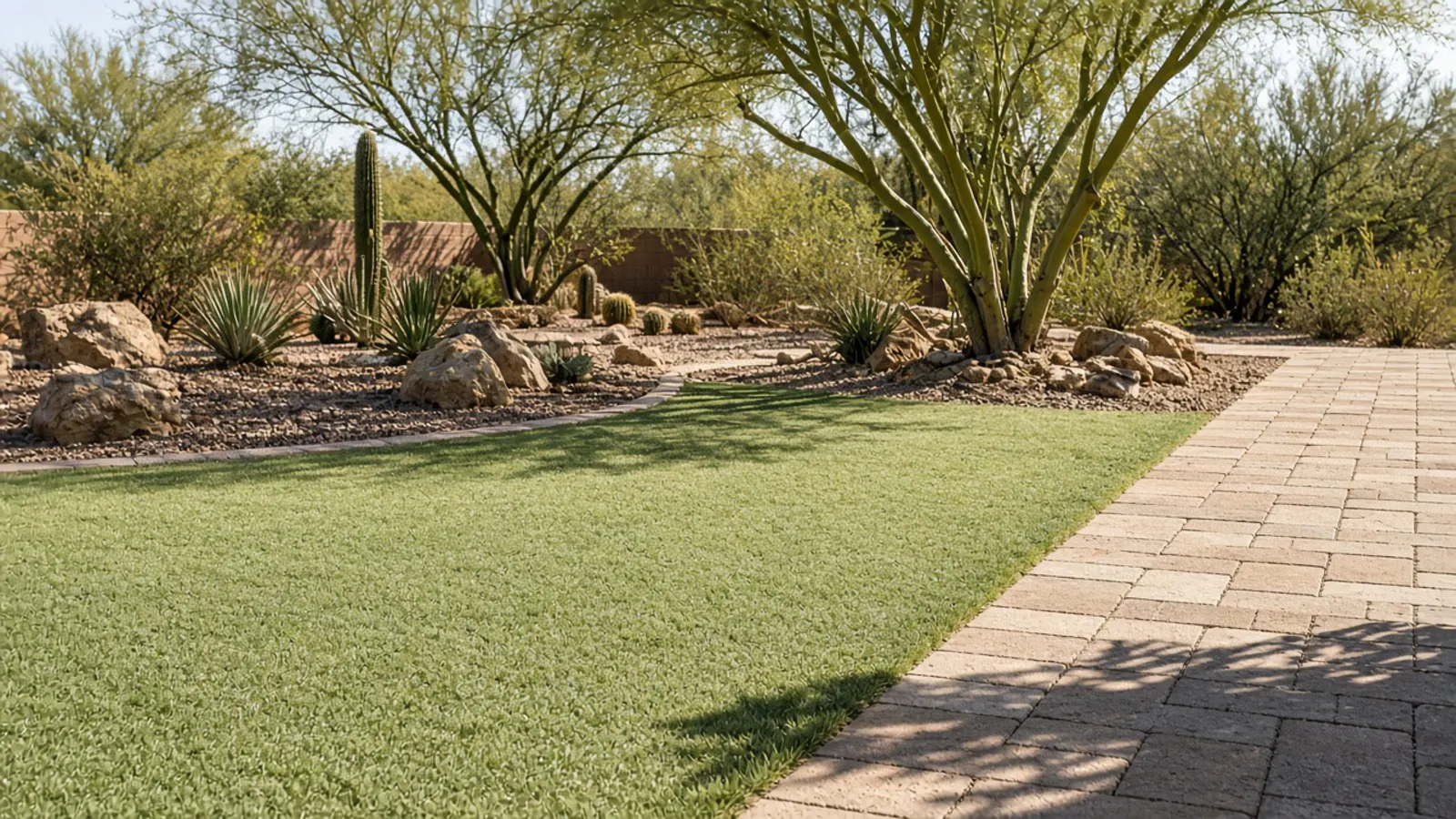
Quick answer: Published answers to how long does artificial turf last in Arizona run from about 8 years to about 20, because sun, foot traffic, pets, infill and the base differ by yard. A warranty year is not the year the lawn will still look new.
We install turf in Scottsdale and we also see lawns that are ready to come out. The ones that age early usually had a soft base, no infill plan or full western sun with no maintenance. The ones that age slowly had UV-stabilized turf, a compacted base and someone who rinsed and brushed them. This is how to read the claims and how to tell when yours is done.
Why the Year Counts Don't Match
Manufacturers and installers publish different ranges. Some say a quality residential lawn can keep its look for 15 to 20 years when the base is right. Others put a typical desert lawn closer to 8 to 12 years unless you maintain it, and they put a cared-for lawn closer to 12 to 15. Budget turf with a poor base shows up in the shorter stories, sometimes in the 5 to 8 year range.
Those are other people's published estimates, not a study we ran and not a promise for your lot. We use them only to show the spread. What we do publish, on our turf installation cost page, is that premium turf lasts about 3 to 5 years longer than entry-level material. That gap is about the product. The sun and the base still decide a lot of both.
A warranty is a contract. It often covers color loss past a stated limit and it often has conditions: the right infill, no misuse, registration, a time window. Read the years and read what voids them. Don't subtract the warranty from today's date and call that your replacement day.
What Actually Ages Turf Here
UV. Summer sun in the Valley is hard on polyethylene fibers. UV breaks the plastic down. You see it first as dull color, then as blades that feel brittle. A west-facing run with no shade ages faster than a north side under a tree. UV stabilizers slow that. They don't cancel it. Shade from a palo verde helps the blades under the canopy and does nothing for the strip by the wall.
Foot traffic and pets. Paths to a gate, a play area and a dog's lap wear flat. Dogs add urine. If the base doesn't drain, that spot stays damp, holds odor and mats. A pet lane can be ready for replacement while the rest of the yard still looks fine. That doesn't mean you must pull the whole lawn on the dog's schedule. It means the worn piece is a separate decision.
Infill. Infill holds the blades up, adds weight and, on pet systems, is part of how odor and drainage are handled. When infill migrates to the edges or washes thin in the traffic lane, the fibers lie down and the backing takes more abuse. Topping infill back up is maintenance. It isn't a new lawn.
The base. This is the part people skip when they compare two samples in a showroom. A compacted, draining base keeps the surface even and lets water leave. A soft or poorly graded base shows up later as wrinkles, puddles, seams that open and odors that cleaning never quite fixes. Our base preparation note is the long version. If the base is wrong, a prettier fiber on top doesn't buy you the long end of the range.
Maintenance and abuse. Dust in Scottsdale doesn't rinse itself the way rain does in a wet climate. Rinse, brush the blades up and keep leaves and mud off so they don't sit and stain. Don't park a car on it. Don't drop grill embers or a cigarette on it. Don't use a pressure washer at a setting that fuzzes the fibers. Those aren't "Arizona sun." They're damage, and they shorten life on their own. The care routine is in turf cleaning and maintenance.
How to Judge the Lawn You Have
- Find the oldest, sunniest spot and the busiest path. Don't judge the yard from the shade under the tree. The west edge and the dog lane tell you the truth.
- Brush a square with your hand or a stiff broom. Blades that stand back up still have life. Blades that stay flat, snap or shed a lot of fiber are tired.
- Look at the color in direct sun and in shade. A mild fade across the whole lawn can be normal age. A washed-out strip only on the west side is UV. A dark greasy patch that stays after a rinse is usually pets or spilled soil, not fade.
- Check seams, edges and the backing. Open seams, edges pulling off the nailer board and backing you can see between blades are structural. They don't brush out.
- Watch water after irrigation or a rinse. Puddles that sit, or a smell that returns a day after a real cleaning, point at drainage and infill. Cleaning again without fixing the base just resets the clock for a week.
- Separate repair from replacement. A small seam, a thin infill lane or a wrinkled corner can be a repair. Brittle fiber across a whole elevation is a replacement. Don't pay to seam a lawn whose blades are already breaking off.
- Match the next product to the use. A front yard that nobody walks is a different turf from a dog run. Putting the lightest face weight in the hardest spot is how you land on the short end of those published ranges.
Lifespan Checklist
- You judged the sunny edge and the traffic lane, not only the showpiece corner
- Blades either stand back up after brushing or they don't
- Infill still covers the backing in the lanes people use
- Seams and perimeter edges are closed
- Water leaves the surface instead of sitting
- Pet odor doesn't return the day after a thorough rinse
- Nothing heavy is parked on the turf
- You're rinsing dust and brushing, not blasting with high pressure
- You know whether the problem is fiber, infill or the base
- Any price you use for replacement came from the cost page ranges, not from a national average
What Changes the Timeline
| Factor | Pushes life shorter | Pushes life longer |
|---|---|---|
| Sun | All-day western exposure, no shade | UV-stabilized fiber and some real shade |
| Use | Dog lanes, play paths, sports | Low foot traffic, no pets |
| Infill | Gone in the lanes, never topped up | Kept at the right depth for that product |
| Base | Soft spots, puddles, wrinkles | Compacted base that drains |
| Care | High pressure, embers, parked vehicles, ignored dust | Rinse, brush and debris picked up |
| Product | Entry-level fiber in a hard-use spot | Premium turf, about 3 to 5 years longer than entry-level on our cost page |
When It's Time to Replace
Replace when the fibers no longer recover, the color is gone in the sun and you're looking at backing, open seams or an odor the cleaning won't hold. That job is artificial turf replacement in Scottsdale. A lawn can still be "ground cover" after it has stopped looking like grass. That's a fair reason to replace it if the look is why you installed it. It isn't an emergency by itself.
Replace a section when only the dog run or one path has failed and the rest still stands up. Replace the whole yard when the fiber is brittle across the sunny areas or the base has failed in more than one place. Putting new turf on a base that puddles repeats the short life.
Price it like a new install, because that's the work: take the old turf out, correct the base if it needs it and lay new material. On our cost page, installed turf in Scottsdale is typically $8 to $15 per square foot. A standard residential lawn is $8 to $12 per square foot. Pet-friendly turf on that page is $10 to $14 per square foot. We don't use a different set of numbers for a replacement story.
We won't tell you your lawn has "three years left" from a photo. Photos miss the base, the infill and how the blades feel. If you want us to look, we'll say what we can see and what we can't.
Wondering if it's repair or replacement? Call (480) 435-9404 and tell us how old the lawn is, whether dogs use it and which side faces west.
Frequently Asked Questions
How long does artificial turf last in Arizona?
There isn't one number. Published estimates run about 8 to 20 years and a warranty isn't the same as a yard that still looks new. Sun, traffic, infill and the base decide it.
Does the Arizona sun fade artificial turf?
Yes. UV dulls fibers and makes them brittle, faster on west-facing yards with no shade. UV-stabilized turf slows that. It doesn't stop it.
Do dogs make turf wear out faster?
They can. Traffic mats the fibers and urine plus poor drainage leaves odor in one lane. A pet area needs the right infill, a base that drains and regular rinsing.
What are the signs it's time to replace turf?
Fibers that stay flat, color that won't come back, open seams, backing that shows or odors that cleaning doesn't fix. A worn dog run doesn't always mean the whole yard is done.
How much does it cost to replace turf in Scottsdale?
We price it like a new install. On our cost page, installed turf is typically $8 to $15 per square foot and a standard residential lawn is $8 to $12.