Tired of Overseeding? What Switching to Artificial Turf Really Costs in Scottsdale
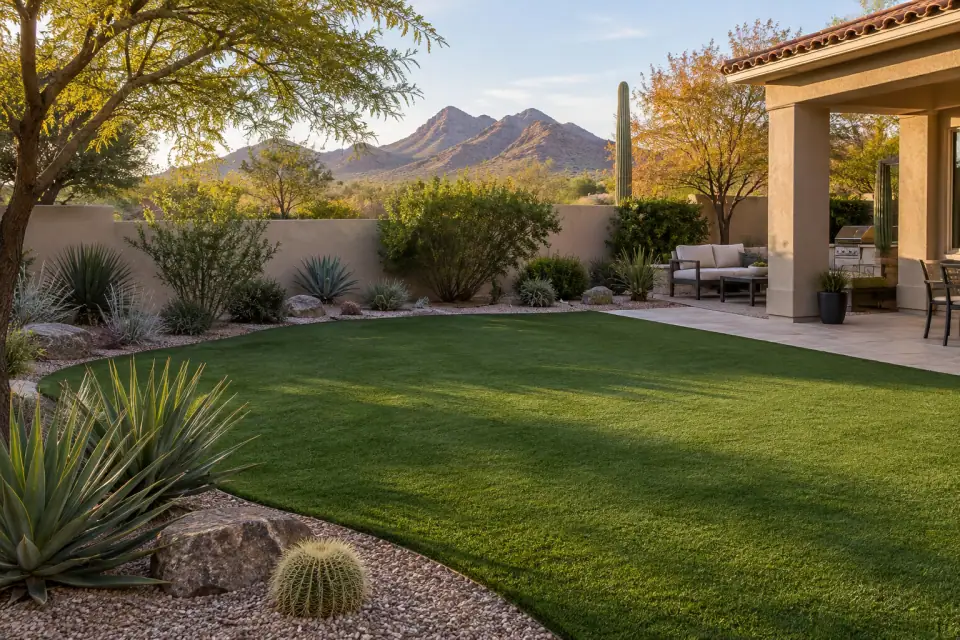
Every fall, thousands of Scottsdale homeowners with natural lawns face the same chore: overseeding. Bermuda grass goes dormant and brown when temperatures drop, so people spread winter ryegrass to keep the yard green. It means buying seed, scalping the lawn, watering heavily for weeks, and then mowing all winter. Artificial turf ends that cycle. At Scottsdale Turf Pros, October is when many homeowners decide they are finished with overseeding. Here is what the numbers look like.
What Overseeding Actually Involves
Overseeding in the Phoenix area is a multi-step process.
- Scalp the Bermuda down to near the soil in September or October
- Dethatch and aerate to prepare the seedbed
- Spread ryegrass seed at a heavy rate, typically 8 to 10 pounds per 1,000 square feet
- Fertilize to establish seedlings
- Water several times a day for two to three weeks until germination
- Mow weekly through winter, then transition back to Bermuda in spring
The ryegrass dies in late spring as heat returns, and the cycle repeats. It is a lot of work for a lawn that is only truly green for part of the year.
The Real Cost of Overseeding
For a typical 1,500-square-foot Scottsdale front or back lawn, here is a rough yearly picture.
- Seed and fertilizer: $150 to $300
- Professional scalping and overseeding: $300 to $600 if hired out
- Water: overseeding uses a surprising amount, often thousands of extra gallons during germination
- Mowing and edging: weekly mowing most of the year, either your time or $150 to $250 per month
- Annual maintenance, fertilizer, and weed control: several hundred dollars more
Over a year, many homeowners spend $2,000 to $4,000 maintaining a lawn of that size. Over ten years, that is $20,000 to $40,000. Water rates in Scottsdale keep climbing, and that cost is not fixed.
What Turf Costs by Comparison
The turf installation cost page lists most installs at $8 to $15 per square foot. A standard residential lawn is $8 to $12. A large yard of 1,000 to 2,000 sq ft is $10,000 to $25,000. That is a real up-front investment. The payback typically comes in 5 to 8 years, then continues as savings. Ongoing maintenance is low: occasional rinsing, brushing, and pet cleanup.
Water Savings in Numbers
Natural lawns in Arizona need roughly 50 to 70 inches of irrigation per year. For 1,500 square feet, that is around 45,000 to 65,000 gallons a year. Artificial turf uses little beyond an occasional rinse. Scottsdale also has had water conservation incentives for removal of high-water turf, and rules for new construction restrict large natural lawn areas. Check the current City of Scottsdale water conservation programs before you start, since rebate availability changes.
Why Fall Is the Right Time to Switch
Skipping overseeding this year and installing turf instead makes sense for several reasons.
- Mild weather: installers and crews work comfortably, and materials handle better than in extreme heat
- No wasted overseed: you avoid paying for seed you will tear out
- Ready for the holidays: a green yard by Thanksgiving or Christmas
- Scheduling: fall is busy, but booking in October still gets most people a November install
- Soil is workable: excavation and base compaction go well when ground is not baked hard
What a Proper Installation Includes
The turf itself is only part of the price. What happens under it decides how it looks in five years.
- Removal of existing grass and roots, usually 3 to 4 inches of soil
- Weed barrier and herbicide pre-treatment where appropriate
- Compacted aggregate base of 3 to 4 inches, graded for drainage
- Seam work and edge anchoring with proper nailing or bender board
- Infill matched to pets and use
- Power brushing to stand up the fibers
Cutting corners on base compaction is the leading cause of dips and ripples later. Ask any installer how they prepare the base.
Heat and Pets
Arizona sun heats turf. Surface temperatures can exceed 140 degrees on summer afternoons. Light-colored blends, cooling infill, and shade structures help. Pets do well on turf with proper antimicrobial infill and a rinse routine. Consider your family, your dog's habits, and how much of the yard you actually use.
When Overseeding Still Makes Sense
Artificial turf is not for everyone. If you enjoy lawn care, have a small natural lawn you use daily, or are in an HOA that requires living grass in certain areas, overseeding may still be right. But if you dread the fall routine, or the water bill makes you wince, switching is a sound decision.
Plan Your Switch
Scottsdale Turf Pros serves Scottsdale, Paradise Valley, Fountain Hills, and Cave Creek. We provide on-site measurements, material samples, and a written scope that spells out base depth and infill. Request a free quote this month and skip overseeding for good.
Questions We Hear Most
Will turf hurt my home's resale value? Well-installed turf is generally viewed as a plus by Scottsdale buyers who do not want a water bill or a mowing routine. Can I keep some natural grass? Yes, many homeowners keep a small patch for the dog or the kids and use turf elsewhere. How long does turf last? Quality products carry warranties of 10 to 15 years and often outlast them with basic care. Does it need to be replaced in the summer heat? No, it is built for Arizona sun, though lighter blends stay cooler to the touch.